Regional Boundaries Influencing Safe Play Features Across Canadian Betting Platforms
Blake Becker · Sep 19, 2026
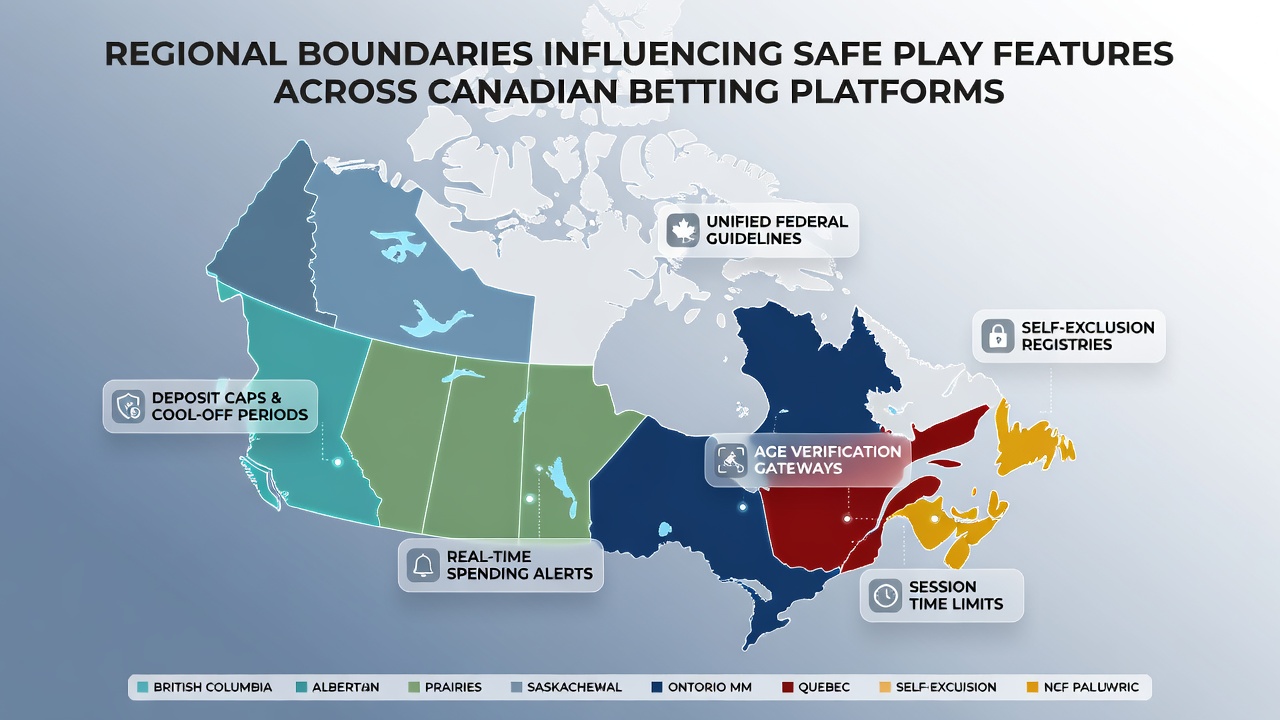
Regional Boundaries Influencing Safe Play Features Across Canadian Betting Platforms
Canadian betting platforms operate within a framework where provincial boundaries dictate the scope and delivery of safe play features, and operators adjust their systems to meet each jurisdiction's distinct requirements. Data from regulatory filings shows that provinces maintain separate licensing regimes which directly shape tools such as deposit limits, session reminders, and self-exclusion databases. Observers note that these differences create a patchwork that platforms must navigate to remain compliant while serving users across multiple regions.
Provincial Regulatory Structures and Their Reach
Ontario established its own iGaming market in 2022 through the Alcohol and Gaming Commission of Ontario, requiring operators to integrate specific responsible gambling modules that include real-time spending alerts and mandatory cooling-off periods. British Columbia relies on the British Columbia Lottery Corporation for oversight, where safe play protocols emphasize integration with the provincial GameSense program that tracks player activity across land-based and online channels. Alberta and Saskatchewan maintain government-run platforms with centralized self-exclusion lists that feed into national databases, while Quebec's Loto-Québec system incorporates language-specific interfaces and regional support hotlines tied to local health services.
Researchers at the University of Alberta documented how these variations emerged after the 2020 federal changes to the Criminal Code, and their analysis indicates that each province developed independent verification standards for age and location checks. Platforms therefore deploy geo-fencing technology that activates different feature sets depending on a user's detected province, ensuring that a player in Manitoba encounters deposit limit prompts calibrated to that province's guidelines rather than Ontario's.
Implementation of Safe Play Tools Across Regions
Deposit and loss limits appear in standardized formats yet receive province-specific thresholds and enforcement mechanisms. In Ontario, operators must allow users to set daily, weekly, and monthly caps through the platform interface, with automatic suspension triggered upon breach, whereas Atlantic provinces route limit changes through a shared portal managed by the Atlantic Lottery Corporation. Self-exclusion periods range from six months to permanent bans, and cross-provincial data sharing occurs through the Canadian Self-Exclusion Database maintained by the Canadian Centre on Substance Use and Addiction.
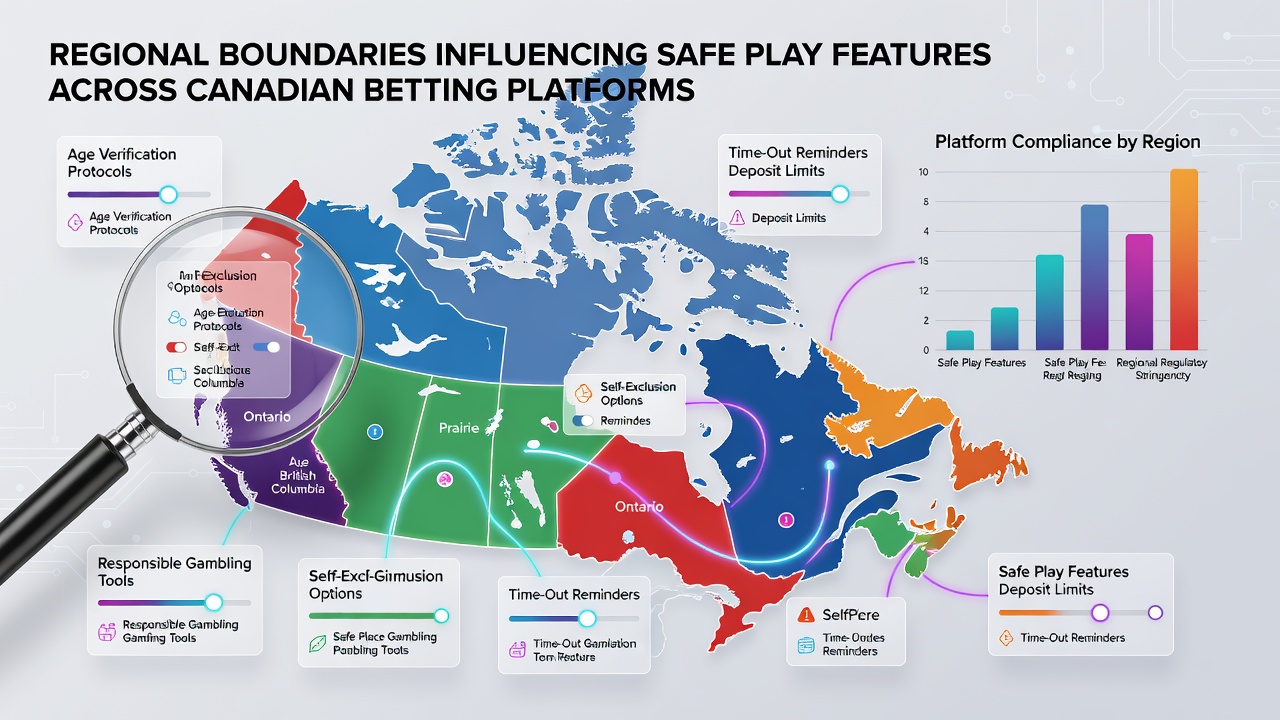
Reality check notifications, which interrupt play to display session duration and net results, follow timelines established by each regulator. British Columbia platforms deliver checks every 30 minutes by default, while Ontario permits operators to adjust intervals based on game type with a minimum of 60 minutes. Studies from the Canadian Institute for Health Research reveal that these timing differences correlate with varying rates of voluntary session termination across provinces. Operators integrate these tools into a single backend system that switches configurations according to IP address and account registration details, reducing the need for separate applications per region.
Technical Adaptations and Data Management
Platforms employ modular software architecture that isolates compliance logic for each province, allowing updates to one jurisdiction's rules without disrupting service elsewhere. Geo-location services verify user position at login and during high-risk actions such as large withdrawals, drawing on datasets supplied by provincial regulators. As of September 2026, several provinces plan to expand mandatory integration with the national self-exclusion registry, which will require platforms to refresh their data synchronization protocols within a 90-day compliance window.
Account verification processes also diverge, with some provinces requiring linkage to provincial health cards or driver's licenses while others accept federal identification. This creates additional layers of identity matching that platforms must perform before activating full safe play dashboards. Industry reports from the Canadian Gaming Association indicate that such technical overhead has led operators to consolidate certain backend functions while maintaining region-specific front-end displays.
Cross-Border Player Experiences
Users who relocate between provinces encounter automatic adjustments to their available tools, and platforms notify them of new limit structures upon detection of a changed location. Temporary visitors receive restricted feature sets that prevent access to features unavailable in their home province. These mechanisms rely on continuous location monitoring combined with account flags that reset upon return to the registered jurisdiction.
Conclusion
Regional boundaries continue to shape the design and delivery of safe play features on Canadian betting platforms through distinct provincial mandates that require tailored technical solutions. Regulatory filings and compliance audits document how operators maintain separate configurations for each market, while shared national resources such as self-exclusion databases provide a measure of consistency across borders. The structure ensures that safe play remains aligned with local oversight even as platforms scale operations nationally.